The Economics of Creating, Producing, Making, Distributing and Marketing Documentaries with Occasional Writing on Film and Video Training
Tuesday, March 1, 2022
How to Say "Your Sorry" when you produce a film that is REALLY upsetting people, the case of Jihad Rehab
Letter from Abigail Disney on film Jihad Rehab
To my colleagues in the documentary community:
On February 23, I addressed a personal email to a group of Muslim and MENA filmmakers that had expressed concern about a film I executive-produced, Jihad Rehab. I sent it privately because apologies are not a performance and that when harm is done, it is, first and foremost, important to apologize with sincerity.
On February 25 a representative of the group contacted me and asked me to publish the contents of the letter because they and others felt that it served as a model for how to address a moment of deep cultural division and pain such as the one we find ourselves in today.
I may not be in total agreement with every criticism of the film but that does not obviate my responsibility to earnestly own the damage I had a hand in.
I call upon my colleagues now, whether you are gatekeepers, funders, curators, heads of institutions, agents, buyers, critics, or other filmmakers to rethink how we all behave when we are called out for our failures and shortcomings. We need to recognize that we are all on the same side if what we are fighting for is a better, more human public square. This is not a war and an apology is not a failure.
If we choose to wield cultural power, we are consequently obliged to act with humility and a willingness to learn when we use our power—with or without intent–to create pain for the people we otherwise say we care about.
___________________________________________
Dear Colleagues,
First and foremost, I am truly sorry. A film I executive produced, Jihad Rehab, has landed like a truckload of hate on people whom I sincerely love and respect. I know that it could not matter less how it was intended to land, it created deep and unnecessary pain and for that, I take responsibility and apologize.
I am committed to going forward better. I am very committed to not creating any more pain, if only by accident or in ignorance.
The responses to have been painful, significant, bewildering, and deeply stressful for each of us in different ways. Adding to the weight of two years of pandemic trauma, a nation that seems to be melting down around us, and bone-deep exhaustion and anger over centuries of racist patterns, systems, assumptions, and practices was never my intention but that has certainly been the outcome. And perhaps the most painful piece of the puzzle is that I have hurt those whom I have always meant to support.
My mistakes are myriad so I will not be able to claim them all in a single list, but I will try. I am sure there is more I still do not see. I do hope if that is so, someone will trust me enough to tell me what they are.
I took everything at face value every step of the way, even though I knew there had to have been more to the security question than should have been satisfied by the representations of a single party. I should have found another perspective that could have strengthened my analysis of how safe the protagonists might be once the film was released. I did not put the protagonists first. I regret that enormously.
I should have pushed back on the idea that the protagonists consented to appear in the film. A person cannot freely consent to anything in a carceral system, particularly one in a notoriously violent dictatorship.
I did not carefully enough vet the tone and the language used to represent the four protagonists, leaving the impression that even though they had never been charged with or tried for any crime, the presumption of their guilt was never in question, and that has left the horrific human rights violation and stain on our national honor that is Guantanamo unchallenged.
Given the gravity of the issues involved, I did not insist on a full fact-checking process to ensure that the highest standards of accuracy were being met.
I failed, failed, and absolutely failed to understand just how exhausted by and disgusted with the perpetual representation of Muslim men and women as terrorists or former terrorists or potential terrorists the Muslim people are. That was a failure of empathy and respect on my part—and therefore the gravest of failures.
I am so sorry for all these failures.
A sincere apology is incomplete without an actionable plan for a better way to go forward. I am soul-searching and examining my own processes, assumptions, and shortcomings so that I can do less harm. The issues this community is asking me and others to address are deep and complicated. They would therefore be better addressed by a thoughtful and deliberate process, one that takes place over time, is inclusive, and respects the fact that anything worth doing is hard and takes resources.
Here are some ideas I wanted to share for your consideration:
I want to host mediated conversation involving all stakeholders to air grievances, express thoughts and feelings, unopposed by reflex defensiveness, and to hear where I have failed and what I have not seen.
More conversations can take place over the course of months or even years, if necessary, since deep change is never fast.
I intend to work with some of our key institutions so that they might also take on their own roles in making the mistakes that were made.
These conversations could include but not be limited to an examination and discussion of:
The processes that lead to unsatisfying results.
The lifting of voices without tokenism or condescension.
The content that hasn’t yet been supported that would lift the dialogue and build stronger social bonds between and among various groups both marginalized and not.
What I hope could emerge from these conversations would be more community input on inappropriate content, better procedures, and systems around access to resources, lifting marginalized voices, and a plan for the future of our field that is both accommodating of new commercial and nonprofit realities as well as respectful of perspectives that come from the margins. I welcome all your thoughts and feedback on any of this.
I have sent this to you directly as a letter rather than making a public statement because I thought my sincerity might seem more genuine to you this way, rather than the other. You are free to share it as widely as you wish and especially with those most deeply impacted, there is no attempt to hide anything here.
With respect and love and high hopes for real change,
Kelly's first feature drew comparisons to John Ford, but she still became one of many female filmmakers who never make a second film. Now, a new restoration and different culture might change that.
Nancy Kelly and star Rosalind Chao on the set of “Thousand Pieces of Gold”
Indiwire Editor’s note: Filmmaker Nancy Kelly made her feature directorial debut in 1990 with the Western
drama “Thousand Pieces of Gold.” A new 4K restoration by IndieCollect can currently be seen in virtual theaters
via Kino Marquee. On the occasion of its new release, Kelly (along with IndieCollect’s Sandra Schulberg)
wanted to share her reflections on her career both before and after its release.
Three years before I discovered Ruthanne Lum McCunn’s novel “Thousand Pieces of Gold,” I was making my living as a ranch hand. What was it that impelled me — from a working class background in a Massachusetts textile town — to pack up and head West? I had never even ridden a horse before, but I wanted an adventure. It was an impromptu decision that changed my life forever.
The cowboys didn’t know what to make of me — not much. But I broke my own horse, rode thirty miles a day on the open range, roped calves from horseback, and castrated them. In time and in their taciturn way, they finally admitted I was “good help” — their highest compliment.
When I read “Thousand Pieces of Gold,” I immediately saw it as a movie. I loved its story of a Chinese woman in the American West — an outsider like me and just as tough. In her book, Lum McCunn portrays a young Chinese woman she calls “Lalu,” whose desperately poor parents sell her into slavery. It’s based on a true story, and I learned there were many Lalus, although few vanquished their slavers.
Like my own fight to be accepted on the ranch, I wanted to celebrate Lalu’s grit on the big screen, just like in the Westerns I had long admired. Although nearly all directed by men, my favorites feature powerful leading women: “Destry Rides Again,” “Johnny Guitar,” “The Big Country,” “The Outlaw.” Women — including Dorothy Arzner, Lois Webber, and Grace Cunard — also directed Westerns, but few of those survive, evidence of how little they were valued.
During the six years I spent financing the movie with Kenji Yamamoto, my husband and filmmaking partner, I ran into plenty of sexism — sometimes blatant, but more often veiled. But I’d proven myself in a far more macho and male-dominated world. I saw show business folk as soft, desk-bound city types who couldn’t rope a calf to save their lives. It never occurred to me that breaking into the film industry would be harder than breaking a horse. I was wrong.
Nancy Kelly on the set of “Thousand Pieces of Gold” Nancy Kelly
Ultimately, I never did get support in Hollywood. Kenji and I had to go indie. We found our first investors in the San Francisco Bay area. The disruptive nature of the story, a woman director, a Japanese American producer, and a Chinese woman in the lead appealed to them, and with those funds, we hired Anne Makepeace to write the script.
People liked the script, so we were back in Hollywood, but the combination of a woman director and a woman lead (let alone a Chinese woman) was too risky. I remember one meeting with an interested producer. I had barely sat down when he said, “The trouble with this story is it’s girl meets boy. Now, if it was boy meets girl, I could see it.”
“That’s the whole point!,” I thought. “Women want to see stories about women.” But I didn’t bother to argue. Infuriated by his blindness, I gathered up my things and stomped out with him trailing behind, nonplussed.
Four years into this hellacious development period, a woman — the Sundance Institute’s Michelle Satter – aimed a ray of light in my direction. She invited Anne, Kenji, and me to the Screenwriting Lab. As Anne has written, Sundance was heaven. High in the glorious Wasatch Mountains, a group of stellar advisers — Robert Redford, Frank Pierson (“Dog Day Afternoon”), Tom Rickman (“Coal Miner’s Daughter”) — read the script and encouraged us to make the movie.
There was only one advisor who took me aside to recommend that we hire a man with a track record to direct. I believe I was listening but — cowgirl that I am — walked away more determined than ever.
Sundance’s imprimatur got the attention of Lindsay Law and Lynn Holst at American Playhouse. Sandra Schulberg, head of its international financing arm, was enthusiastic too. New Front Films, which she co-founded, had distributed one of my earlier documentaries, “A Cowhand’s Song.” The Playhouse mission was to finance independent films by new talents, giving first-timers like me a chance. I felt we’d found a home at last. And support from American Playhouse enabled us to attract Film Four in England and more private investors. Finally, as we say in rodeo, it was time to “open the chute!”
While directing my documentaries, I had learned to deter sexism by making sure every male crew member knew he owed his job to me. Making “Thousand Pieces of Gold” — a period piece on an indie budget — was very challenging, but it was a labor of love. Kenji and I, with co-producer Sarah Green, put together a cast and crew who knew I was the boss and respected me. For once, I didn’t have to fight chauvinism from anyone.
The whole team still feels like family: Rosalind Chao, Chris Cooper, Michael Paul Chan, Will Oldham, and the rest of our fantastic cast; Bobby Bukowski and his camera/grip/electric crew; Dan Bishop, Dianna Freas, and their art department; Judy Karp and her sound team; our composer Gary Malkin.
“Thousand Pieces of Gold” IndieCollect
After “Thousand Pieces of Gold” was released, I got extraordinary reviews from critics, some of whom compared my talent to that of John Ford. My agent set up many many meetings, but I became a victim of prejudice. One producer bluntly told me, “You are a good director, too bad you’re a woman.”
I never got another feature film made. Despite having proven myself as a good director, the men who controlled the film industry would never see me, unlike my ranching buddies did, as “good help.”
I am part of a large group of women who never made a second feature. Why? The percentage of women doctors and women lawyers is now very close to parity, but the USC Annenberg Inclusion Institute’s most recent annual study, Inclusion in the Director’s Chair, found that in 2019 the number of women film directors was 10.6 percent. And that was a 13-year high! The Annenberg study also found that the ratio of male to female directors over the past 13 years is 20:1.
In her rousing 2018 Oscar acceptance speech, Frances McDormand said, “We all have stories to tell and projects we need financed. … Invite us into your office and we’ll tell you all about them.”
Thirty years later, with Kino Lorber re-releasing it, audiences can see that the stunning 4K digital restoration of “Thousand Pieces of Gold” that we did with Sandra Schulberg and IndieCollect still resonates today and they see how skilled I am as a director. A movie I have long wanted to make, “When We Were Cowgirls,” may be on the horizon.
As Frances McDormand said, invite me to your office and I’ll tell you about it.
Kino Lorber’s re-release of the new 4K restoration by IndieCollect of Nancy Kelly’s “Thousand Pieces of Gold” can currently be seen in virtual theaters via Kino Marquee.
Note: Debra Franco's series on independent distribution captures this business before it disappeared forever. I think she nailed it. This was originally published by the International Documentary Association. Mitchell Block
Direct Cinema Limited, founded in 1974 as an educational media distributor, has been selling home videos since the mid-1980s. In the past five years, they have expanded their home video collection to more than 200 titles; and the company's sales ratio is now 55% to the educational market and 45% to the consumer market.
In the past, Direct Cinema would look for titles that could sell 200-300 units to educational institutions. They are now increasingly interested in videos that have a modest educational market but can sell 3,000-5,000 units to consumers. Titles range from videos on well-known artists (Frank Lloyd Wright, the American Expressionistic painters) to military history (D-Day Remembered, Men of Bronze) to religion and spirituality (The Way of Myth, The Women and Spirituality Series). According to Mitchell Block, president, the company also has some titles that have sold more than 5,000 units in both markets, notably the animated classic The Man Who Planted Trees. In spite of the focus on home video, Direct Cinema still considers the educational market significant. Its tiered pricing structure reflects this. Videos that will reach only the college market are priced from $150 to $350; home videos are priced from $15.95 to $39.95 for consumers and $95 for institutions.
Direct Cinema reaches the consumer market mostly through retail and specialty catalogs. They sell to retail directly; staff members handle sales, open new accounts and provide service to the video, book and high-end specialty stores that are their major retail clients. Direct Cinema focuses on site-specific retail outlets such as museum bookstores and gift stores at parks and national historical sites, with themes matching their videos. For example, they sell videos of the Academy Award® winning short documentary One Survivor Remembers at the U.S. Holocaust Museum bookstore in Washington, DC; a video on American sculptor Augustus Saint-Gaudens at the museum devoted to the artist; and Ric Bums's historical documentary, The Donner Party, at the Donner Memorial State Park giftshop. [A substantial number of Direct Cinema titles are Oscar® nominees and winners in the short and feature documentary categories.] Selling to retail this way is time- and labor-intensive and can be frustrating, according to Block. "You have to convince the stores that your tapes will sell, be there when they return your calls, deal with exchanges and returns—and then they might buy only two copies." To prove their videos will spark consumer interest, Direct Cinema has placed ready-made displays in stores at their own expense; to keep the stores interested, they must continuously "hand-sell" their product line. And, with each new title, new retail outlets must be found that match the video's special interest market.
For all the time and expense, this remains one of the best ways for small companies without the resources of mass market distributors to reach consumers directly, according to Block. And it can pay off. Direct Cinema now has its videos in more than 100 bookstores, including the chains Learningsmith and Barnes & Noble, as well as in independent book stores, including some specializing in African-American, women's and regional themes. Orders can range from 10 videos a year to 50 or 100 per store. Even orders from smaller clients add up and the site specific outlets often order continuously over many years.
Block believes that the vast majority of video stores in the U.S. aren't interested in independent or alternative videos because they require work and training to sell. Direct Cinema does not expend much effort to sell to the large video rental chains. Although they have occasionally placed titles into some supermarket/K-Mart outlets, they face an uphill battle to get these stores to consider titles that do not have broad mainstream appeal. Direct Cinema also makes use of specialty catalogs to sell videos to the consumer and educational markets. Videos in the educationally-oriented catalogs (e.g., Social Studies School Services and Insight Media) do not sell in great numbers, but titles remain in the catalogs for a number of years. The specialty consumer-video catalogs, on the other hand (e.g., Signals), have sometimes moved as many as 1,000 units of Direct Cinema's videos, but these tend to want new product all the time. This is a problem for "evergreen" titles, which sell consistently over time but may get dropped if they do not sell large numbers in the short term.
The Women and Spirituality Series, which Direct Cinema distributes in this country, is an example of the kind of work and strategizing that goes into marketing specialty independent videos today. The series is actually three separate titles (Goddess Remembered, The Burning Times and Full Circle) produced in Canada by the National Film Board. The documentaries follow producer/narrator Donna Read and her female crew on an exploration of the emerging women's spirituality movement in North America .
When Direct Cinema began selling the films to the educational market, it was unclear whether the series would have a consumer market. Then, as the filmmaker began to lecture on the subject around the country, phone calls came in from women asking to buy the tapes for themselves. Direct Cinema agreed to make them available in home video at $34.95 per tape. Once it was clear there was consumer interest, Direct Cinema began to market seriously. They mailed to groups dealing with women's spirituality and took out advertisements in publications with spiritual themes, such as Parabola and Women and Spirit, and in publications that are sold in lesbian and feminist bookstores. As distribution built, the Film Board syndicated the series and sold it to U.S. public television stations themselves, market by market. Direct Cinema called every station that signed on and offered the series as a premium for viewers who pledged. This strategy proved so successful—2,000 units were sold this way—that the Film Board decided to take back the rights to sell the videos themselves.
The videos continue to sell well to the educational market. Direct Cinema maintains tiered pricing for the series: $95 for consumers , $250 for public libraries and $350 for universities. Consumer distribution has continued to be "very grassroots—a lot of word-of-mouth that builds every year," says Block. Direct Cinema spends a lot of time dealing with the public, answering individual letters and phone calls, and servicing the smaller feminist bookstores, some of which buy only this title from them. Block is not especially optimistic about the future of specialty home video, particularly for most independently made documentaries. He cites several reasons. Home video sell-through prices are low and margins extremely tight; and it takes tremendous effort and resources to find new retail accounts for niche markets.
Cable channels like A&E have increased the competition with the multitude of documentaries they produce and sell on-air. At the same time, independent distributors find it harder to sell their videos on-air through public television.
Nevertheless, Block is excited about some aspects of the future—especially the possibility of selling videos over the Internet. Direct Cinema has experimented with reaching niche markets this way, with some notable success. Recently, producers of a Direct Cinema title on schizophrenia, I 'm Still Here, linked their website to the website of the National Association of the Mentally Ill. They describe the film and offer it to individuals for $19.95. With no other promotion, Direct Cinema has been selling one to two copies a day to individuals who log onto the NAMI site and discover the video. In another example, filmmaker Robert Drew posted a listing about his video The Sunship Game on an Internet bulletin board for glider enthusiasts. The film, a documentary from the 1960s about a glider competition, is considered a classic among those in the glider world, but none of them knew where to buy it. In two weeks, from the one posting, Direct Cinema sold more than 50 units at $34.95.
Direct Cinema Limited
P.O. Box 10003
Santa Monica CA 90410-1003
U.S.A .
tel: 310-636-8200
fax: 310-636-8228
contact: Mitchell Block
e-mail: directcinema@aol.com
web: www.directcinema.com
The 10 Rules of Personal Documentary Filmmaking By Doug Block
I saw this article and feel that it helpful. Full credit to Doug Block,
This article originally appeared on Doug Block's blog, "Around the Block", in 2007 and remains one of his most popular posts. It is being re-published here without Doug's permission I hope it will promote the 2019 re-release of his critically-acclaimed documentary HOME PAGE, his first personal documentary.
Doug is the founder and host of D-Word, a popular online community of 17,000+ documentary professionals.
Mitchell Block
"Home Page" (2019 re-release)
Directed By: Doug Block, Copacetic Pictures Official digital and dvd re-release on April 16, 2019
Anthony Kaufman invited me to speak to his NYU Contemporary Documentary class last week on the subject of the personal doc.
Just for fun, in preparation, I decided to compile a list of my Ten Rules of Personal Documentary Filmmaking.
Not that I have ten rules, exactly. Or any rules, for that matter. But I do have some strong opinions based on having made a couple of personal docs myself, as well as having helped produce a few that I consider rather magnificent examples of the genre (Silverlake Life, Jupiter's Wife and the soon-to-be-released A Walk Into the Sea: Danny Williams and the Warhol Factory).
Normally I would have tossed these opinions out in the course of the evening and they barely would have caused a ripple. But the second I announced I had TEN RULES to give the class, everyone excitedly whipped out their notebooks and took down every word. Lesson learned.
So, here they are, in no particular order of importance, my Ten Rules of Personal Documentary Filmmaking. Go ahead, whip out your notebooks...
The Ten Rules of Personal Documentary Filmmaking - Rule #1
THE KIDS GROW UP documentary, Directed by Doug Block
RULE #1: Don't make it all about you (even though, of course, it's all about you)
Actually, I lied about order of importance. This, to me, is the rule of rules, the rule every other rule is rolled into. Because audiences watch a personal doc with a built-in resistance and even resentment. I'm not sure why that is. In virtually every other art form critics and audiences eagerly seek out personal works. Anyone with a reasonably dysfunctional family can pen a best-selling memoir. In the theater, many of our most honored playrights (Tennessee Williams, Eugene O'Neill, Neil Simon) write thinly-disguised autobiographies. But for some reason first-person docs are greeted with crossed arms, prove-it-to-me scowls, and an attitude of "who the fuck are you to be putting your life up there on screen?!?"
So the whole art of the personal doc is to appear as if it's not really so much about you. It's about your remote genius of a father who died mysteriously (My Architect). Or it's about your relationship with your mentally ill mom (Tarnation). Or it's about General Sherman's march through the south, for crying out loud.
But, honestly, in the end, it's really all about you. Your personal journey to enlightenment (and maybe a girlfriend, boyfriend or spouse, along the way).
On the other hand...
The Ten Rules of Personal Documentary Filmmaking - Rule #2
THE KIDS GROW UP documentary, Directed by Doug Block
RULE #2: A personal doc is not your personal therapy.
Imagine your film playing before a packed audience on a big screen. It's not the place for getting even with nasty ol' mom and dad, believe me. It's not for whining about your rotten childhood. It's not the vehicle for getting the attention you've desperately craved all your life.
Whether it's a personal doc or not, moviegoers want to be entertained, educated and, most of all, enthralled. They want to go along with you on your ride, not see you working through your issues. Spare us, and go see a good shrink. And save a ton of money in the process, too.
The Ten Rules of Personal Documentary Filmmaking - Rule #3
112 WEDDINGS documentary, Directed by Doug Block.
This rule might as well be rule 2A, but then I'd have to come up with 11 rules and whoever heard of doing that? It's really in line, though, with what I was saying about not working out your personal therapy on screen...
RULE #3: Don't tell us your feelings. Show or indicate your feelings.
It's so much more interesting to convey your state of mind through the language of cinema, as opposed to spoken language. Especially when it comes to narration. In 51 Birch Street, I made it a point to only talk about what was happening story-wise in the narration. My feelings were never referred to.
Which doesn't mean you don't know what I'm feeling. When you see my dad marry his former secretary so shortly after my mom's death and they lip-lock for 12 (count 'em, 12!) seconds, do you really need to hear me to say "Yuck"? Or is it better to let the audience decide for themselves that this must be profoundly uncomfortable for me?
It doesn't mean avoiding emotion, either. Just don't tell us about it. Let it come out organically through the story rather than stating the obvious.
The Ten Rules of Personal Documentary Filmmaking - Rule #4
HOME PAGE documentary, Directed by Doug Block.
As I've mentioned previously, for some reason audiences, buyers and critics come to first-person documentaries with a certain "show me" attitude. As in, "Go ahead, dickwad, show me you're an interesting enough person to justify spending ten bucks and the next 90 minutes of my life with!" And they seem to especially get a bug up their butt if the filmmaker appears to take him or herself too seriously. Therefore...
Rule #4: A sense of humor is essential (especially self-deprecating humor)
My own feeling is you have maybe five minutes to establish that you're an okay fella, but I say go for it right from the top. And nothing disarms viewers more than a well-timed joke or two at your own expense.
Say what you will about Michael Moore but the guy knows how to poke fun at himself. Morgan Spurlock took a little too long getting there for my taste in SuperSize Me (all those factoids about fast food, sheesh!) but he eventually delivered customer satisfaction. And there's a reason why longtime personal doc favorites like Nick Broomfield, Ross McElwee, Judith Helfand and Alan Berliner haven't worn out their welcome -- they've mastered the art of self-effacement.
The Ten Rules of Personal Documentary Filmmaking - Rule #5
112 WEDDINGS documentary, Directed by Doug Block.
It should be obvious by now that many of these so-called rules could apply to all non-fiction films, not just personal ones. For instance, even the most sober social issue documentary could be helped enormously by finding moments of unexpected humor. Well, the same goes for my next rule in spades...
Rule #5: Put your story in context.
What makes your personal story important to people outside your immediate family? Why would a viewer in France or Japan or South Africa find it relevant to their lives? Usually it's because it taps into a much larger, more universal human experience.
Even if your film is primarily about your family, what might be the larger themes? Is there something about the time period or setting it takes place in that could be further explored? Is there anyone else from outside the main story (experts on the subject, perhaps) that could add more perspective?
With 51 Birch Street, I vividly remember finishing our first rough cut right before the Christmas holiday break. When we returned, editor Amy Seplin was adamant that while the story of my parents worked pretty well, there was something missing that kept it from being more than just a "nice" story. So we turned our attention to the earlier years of their marriage, the 50's and 60's in particular, and to the stifling suburban lifestyle that contributed so much to my mother's unhappiness. It didn't take a huge amount of work to tweak things -- an archival clip or two, some photos, an additional interview. But the effect was profound. When 51 Birch Street went into release, critics considered my parents emblematic of a whole era and the film was compared favorably to the novels of Updike, Cheever and Roth.
So, you don't necessarily have to know the larger context for your story from the get-go. In fact, there are aspects you'll almost certainly discover in the process of shaping the film. But it's something you should be mulling from the beginning, since it informs much of what you'll end up shooting.
The Ten Rules of Personal Documentary Filmmaking - Rule #6
51 BIRCH STREET documentary, Directed by Doug Block.
This next rule is a subtle one but I think gets to the heart of why some people are so resistant to certain first-person docs.
Rule #6: Don't make yourself out to be better than your other main characters.
By that I mean don't prove to us how sensitive you are. Don't be the pillar of wisdom. Don't go on about how much you've learned in the course of your "journey". And by all means don't make yourself seem heroic at the expense of others. Should you manage to influence Wal-Mart's ammunition policy for the better, kindly refrain from grandstanding photo ops with Columbine shooting victims.
Ok, I never said my rules were everybody's rules.
The flip side of Rule #6 is you should be ready and willing to look worse than anyone else in your film. Especially if you're dealing with your family. As mentioned previously, no one comes off well using a camera to get even with their parents. That's not to say there's no place for anger, but not when it's used to air old grievances or get revenge. It's doesn't play well because you have an unfair advantage. You're the one doing the editing.
Instead, smart personal filmmakers are often bumbling or self-effacing. Curious, perhaps, but confused. Self-doubting. Uncertain. Vulnerable. And because they are, audiences are far more willing to go along with them for the ride.
As an aside (I just can't refrain myself): We know full well that most first-person docs are about personal journeys. That's why well made ones are so fascinating. But, trust me, don't ever use the phrase "my journey" in your narration unless we see you in a plane, train or automobile.
The Ten Rules of Personal Documentary Filmmaking - Rule #7
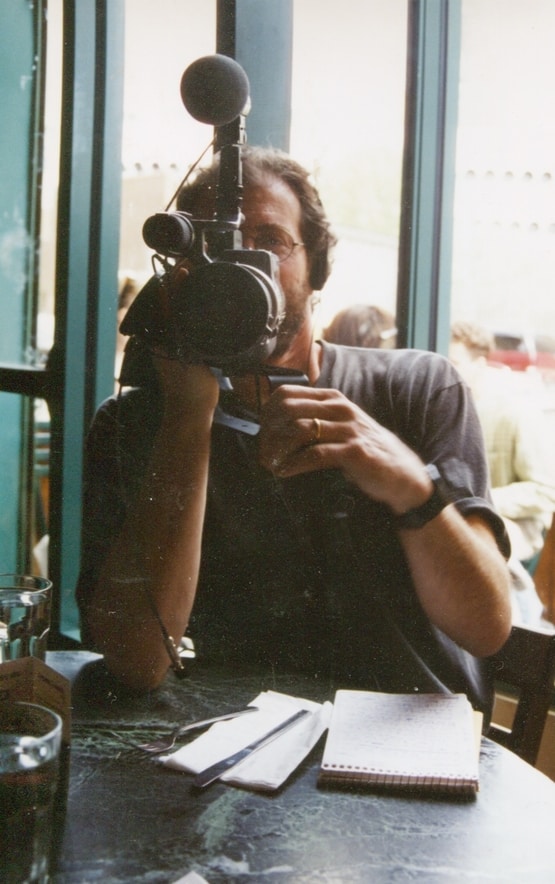
Photo of Doug Block taken by Justin Hall, the main character in HOME PAGE, back in 1996. Shows what it's like to be interviewed by Doug!
One of the biggest challenges facing those making first-person documentaries is to figure out their own role in the film. Do they shoot it themselves or hire a camera person? Should they appear on screen or "hide" behind the camera? Will they use narration to help tell the story or not?
While I tend to prefer docs shot by the person telling the story (and it's how I do my own personal films), it's certainly a valid and time-honored tradition to be an onscreen presence in your own documentary. However, it does lead right to...
Rule #7: If you're in it, don't overstay your welcome.
Unless you're unusually charming or witty, you run a huge risk of irritating the hell out of the audience if you put your mug up there too much. The trick is to find just the right balance between making your presence felt without making it seem self-indulgent.
How do you achieve that balance? For starters, hire the best editor you can possibly afford and give her room to truly collaborate. Together, find a solid justification for each time you appear on screen and pick your spots carefully. And once you have a cut far enough along, hold a couple of small screenings (and not just with your friends) to solicit honest feedback.
Yes, there's a whole lot more to it than that. But when it comes to being in your own personal doc, it so often boils down to... less is more.
The Ten Rules of Personal Documentary Filmmaking - Rule #8
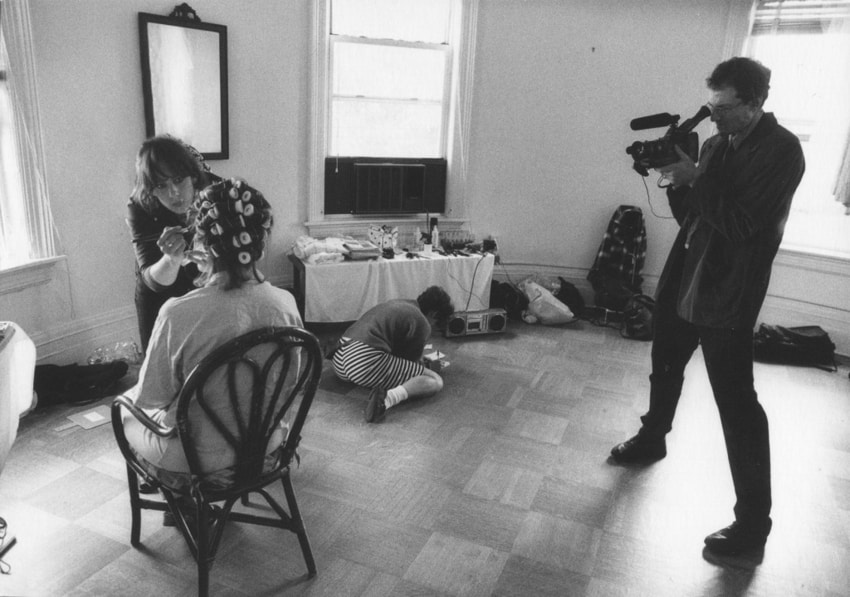
Doug Block filming for his documentary 112 WEDDINGS.
I guess it comes with the territory that aspiring filmmakers with no camera experience whatsoever are shooting their own personal docs these days. After all, hiring a camera person is expensive and high quality digital camcorders are almost ridiculously cheap. Now anyone with access to a great story can get it down on tape themselves -- and the temptation is irresistible.
However, as someone who loves watching first-person documentaries, I'm begging you...
Rule #8: If you're shooting it, learn how to shoot.
First and foremost, every camera comes with something called a manual. Read it. Learn it.
Then practice. Or, rather, practice practice practice. Practice holding the camera steady. Practice using the manual exposure. Practice moving with the camera smoothly.
And keep in mind the core vocabulary of your chosen medium. Cinematography isn't just about medium shots. The well-chosen close-up is hugely powerful. Establishing shots create context. Cutaways will save your life in the editing room. Each has its own meaning and adds to the impact of your story.
Did I mention practice?
I really don't mean to sound like a crank or a scold (or, God forbid, a film buyer!), and maybe it's just that I've been a professional cameraman for over 25 years now. But there's some really amateurish video that's made its way to the big screen lately. And it kills me when it ruins films that otherwise could have been great.
The democratization of the medium is all well and good. But do us all a favor and learn the basics, folks.
The Ten Rules of Personal Documentary Filmmaking - Rule #9
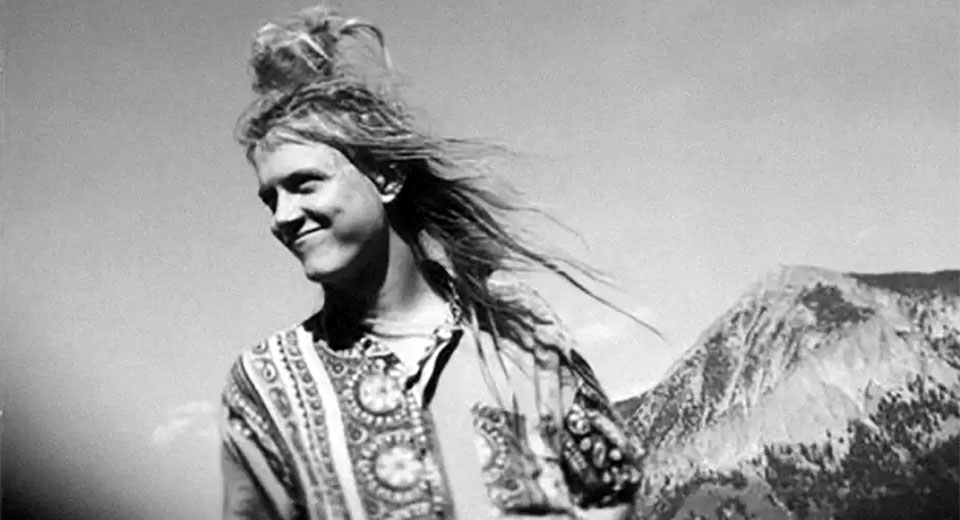
Justin Hall, the main character in Home Page documentary.
When it comes to making personal docs, you can run but you can't hide. Whether you choose to be onscreen or not, narrate or not, there's no escaping the fact that you are in it. This is a high-risk endeavor and not for the faint of heart. In fact, the success of your film is often directly proportional to your willingness to put your neck squarely on the chopping block.
But if you follow this next rule you can breathe a little easier. Because...
Rule #9: You're not really you. You're just a character in a story.
First-person documentaries are no different from other movies in terms of audience expectations. Some moviegoers seek out films that bust genre conventions or play with the form, but most just want to lose themselves in a good story.
So, unless you're a pure experimental filmmaker, your task as a director is to stand at a remove, let go of your ego and work through your arc as the story's protagonist or driving force. The arc may be small or subtle, but it's always there. Your character begins at point A, and whether you end up at point D, G, P or Z, there's inevitably a movement towards discovery and growth through the course of the film.
It may seem impossibly daunting to maintain that kind of distance and objectivity. But I think it's actually liberating. If your focus is on character growth, you'll feel far more free to show yourself behaving badly at times (which, as I've discussed, is usually a good thing). And hopefully far less inclined to wallow in self-indulgence.
The Ten Rules of Personal Documentary Filmmaking - Rule #10
THE KIDS GROW UP documentary, Directed by Doug Block.
In looking back over my first 9 rules, I realize I sometimes sound as cranky and negative about personal docs as some of their fiercest critics, and I don't mean to be. I prefer to think of it as tough love, or like being hardest on those you love most.
The awful truth is, I think personal documentaries are the realm where the most exciting, innovative and powerful work in all of cinema is happening these days. It's why I'm currently working on a sequel to 51 Birch Street, and why I find it so hard to resist getting involved when truly special projects like Esther's come along. If I've focused more on the potential pitfalls of turning the lens of a camera around on your life, it's only because I want to be blown away if I see your film on the big screen.
On that front, I hope my last rule will leave you with a wee bit of encouragement.
Rule #10: Trust your story.
Trust that your story is unique, even though you might fret it's just about your boring old family.
Trust that your story is universal, so long as you tell it as specifically as you can.
Trust that your story is compelling, and approach it with a rigorous eye for its inherent drama.
Trust your story and stop worrying so much about how you're coming across, or whether you'll be rewarded or crucified by critics.
For all I've written about how audiences come to first-person docs with a built-in resistance, it's not like they can't be quickly won over. When the lights go out, everyone is hoping for a story they can get deeply absorbed in and make a profound connection with.
So trust your story, and knock us all out with that personal documentary of yours.
"Home Page" (2019 re-release)
Directed By: Doug Block, Copacetic Pictures Official digital and dvd re-release on April 16, 2019
Doug Block is the founder and host of D-Word, a popular online community of documentary professionals. Doug is perhaps best known for a series of critically-acclaimed personal documentaries including 51 BIRCH STREET, HOME PAGE, 112 WEDDINGS and THE KIDS GROW UP.
Doug is currently in production on a new film, BETTY & HENRI, where he is attempting to solve the mystery behind a 20-year old love letter that he discovered in a used travel book.
Doug has also served as producer on numerous other documentaries including: RESURRECT DEAD (Sundance Film Festival), JUPITER'S WIFE (Sundance Film Festival), THE EDGE OF DREAMING (PBS) and A WALK INTO THE SEA.
On April 16, 2019, he's re-releasing a special 20th anniversary edition of his film HOME PAGE, about a transformational year in the young life of the internet following the “founding father”of personal blogging. 20 years later, the film is more relevant than ever.